 Skip to main content


If you are reading this page, chances are you or someone in your family has been diagnosed with dust mite allergy. The allergens originating from dust mites are the world's second greatest cause of allergies, behind pollen, and are significant triggers of asthma attacks.
Estimates are that as high as fifteen to twenty percent of the earth’s total population is allergic to the allergens produced by dust mites.
- Why do allergies occur?
- What are dust mites?
- What is the difference between dust mites and bed bugs?
- What does a dust mite look like, and can you see them?
- Can you feel dust mites crawling on your skin?
- Where do dust mites come from?
- Where do dust mites live?
- Do dust mites bite, and what do they eat? Do dust mites cause allergies?
- What are symptoms of dust mite allergies?
- How do we test for dust mite allergy?
- How do you kill dust mites?
- How do you prevent and get rid dust mites in your home?
- How do you treat dust mite allergies?
Why do allergies occur?
A small crash course about the human immune system helps us understand the why's and how’s of an allergic reaction.
The immune system is what our bodies rely on to keep us safe. It has natural barriers that keep offensive particles out. These barriers include our skin, hair in our nostrils, the thin membrane on the eye, and mucus in our throats and airways.
Actions that rid the body of foreign entities present may include sneezing or coughing to clear the airway while crying or urinating clear our eyes and urinary tracts.
However, should a foreign material make its way into our bloodstream or in contact with our inner parts, they usually come under the scrutiny of a form of cellular border patrol. This defense mechanism is our immune system.
It is a combination of cells and proteins that assess the nature of the foreign body present. To do this, they use proteins on the foreigner's surface to decide whether the protein pattern is unfamiliar (antigen) and should be taken into custody and destroyed or recognized as self and left alone. The appraisal of these antigens is another group of proteins known as antibodies.
On recognition of an antigen, antibodies set off a series of events meant to destroy the antigen and its source if present. The cascade's outcome includes inflammation (feverishness, swelling, and reddening of the skin) and the adaptive immune system's engagement. These usually end up destroying the foreign material. Such responses happen when foreign material appears to be pathogenic.
These responses can be discomfiting, so the immune system has checks to ensure the response is appropriate. Nonetheless, some harmless foreign material making their way into the system can cause something of an overreaction, for some people's allergic reactions can even cause chest pains.
Researchers in the United States polled about 700 people to ask about sexual function, sleep, and fatigue. The study participants were in their 30’s and 40’s. About half of the respondents said they had allergic rhinitis. Those with allergic rhinitis were not taking treatments for their condition.
Researchers were surprised to find that 83% of the people with allergies said that their allergies affected their sex lives.
Some materials such as pollen, dust mite excrement and shedding, and proteins in foods such as peanuts, milk, and seafood are known as allergens. Allergens are essentially antigens.

The immune system recognizes these allergens and, in response to their presence, causes the body to exhibit symptoms common to all allergies such as a runny nose, mottled red itching rashes (hives), swelling of body parts such as the tongue, lips, eyes and face and, itching eyes, throat and ears.
Some responses can be life-threatening, referred to as anaphylaxis (anaphylactic shock). This response requires epinephrine (adrenaline) to suppress the immune response long enough for the individual to make it to the nearest health facility.
The most pervasive allergens are pollen and waste from dust mites. Pollen is usually avoidable, as it has to do with the outdoors and is relatively seasonal. Dust mites, on the other hand, present an all-year-round problem, as we have to deal with them in our living spaces.
Some research indicates that up to 1 in 5 people are allergic to dust mites and suffer the attendant trouble of an allergic reaction. With dust mites presenting globally, this can be a recurrent problem.
What are dust mites?
Given that the chances of being allergic to or personally knowing someone allergic to dust mites is high, their characteristics merits some discussion.
Dust mites, by their taxonomical (biological naming system) identification, are arachnids. They are related to spiders and ticks (dust mites are not the same as bird mites). Being arthropods, they are distantly related to all creatures on the planet with an exoskeleton.
There are two well-known species of dust mites:
- The American House dust mite (Dermatophagoides farinae )
- The European House dust mite (Dermatophagoides pteronyssinus).
Some other lesser-known species are the Dermatophagoides microceras and Euroglyphus maynei (Mayne’s House dust mite).
They are non-parasitic, unlike scabies or skin follicle mites. Their means of sustenance exist in their genus name. Dermatophagoides can be broken down into dermato (skin flakes) and phagoides (eater), indicating that these organisms draw nourishment from dead skin flakes and micro food crumbs.
They also take water from the atmosphere through their exoskeleton. This process happens because of these mite's little make-up. This feature negates the need for water supply, but it dictates that the mite inhabits an adequately moist place. Think bed!
'The typical life cycle of a dust mite is anywhere from 65 – 100 days.' (https://vsbattles.fandom.com/wiki/Dust_Mite)
What is the difference between dust mites and bed bugs?
Real quick, there is some misconception between the bedbug and the dust mite. This confusion originates from both creatures' similar habitat – they both like damp, dark spaces in our homes. They also elicit an allergic reaction by their feeding behaviors. That is where the similarity ends.
Bedbugs are visible to the naked eye for one, with the average adult being up to 5mm. Besides, they are insects and not arachnids easily distinguished by having six jointed limbs instead of 8.
Back to more information on dust mites.
What does a dust mite look like, and can you see them?

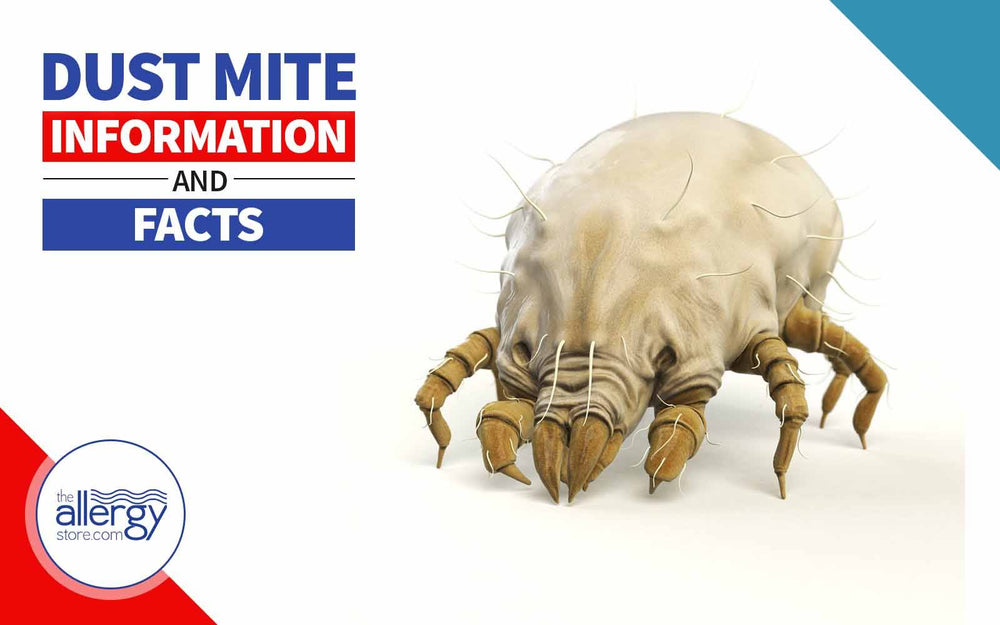
Dust mites are closely related to spiders and ticks. They have eight hairy legs, no eyes, no antennae, a mouthpart group in front of the body) and a tough, translucent shell.
Dust mites can be difficult to detect due to their small size. Dust mites, unlike their relatives, are not visible to the naked eye. Some estimates record them in the ranges of 0.2 to 0.3 mm in length. To put that in perspective, approximately 33 to 50 of them would fit on a centimeter.
Being translucent also does nothing to aid us in seeing them. They only look like small white spider-like creatures.
Adult dust mites live for about a month and female dust mites live for about 8 to 10 weeks. The female lays eggs singly or in small groups. From egg to adult takes about 3 to 4 weeks. If humans or pets live in your house, you have dust mites. No special test is needed to check, it is a fact.
Can you feel dust mites crawling on your skin?
The quick answer is no, and here's the explanation. Dust mites are so light that there is evidence indicating that they can remain suspended in the air, on drafts in the room, and not felt on the skin. They bear the family resemblance of having a hairy exoskeleton, a complex mouthpart group, and eight jointed legs. However, they have no eyes or antenna.
Where do dust mites come from?
If humans or pets live in your house, you have dust mites. No special test is needed to check, it is a fact.
Adult male dust mites live for about a month and female dust mites live for about 8 to 10 weeks. The female lays eggs singly or in small groups. About a month of that time, the mite is growing from an egg to an adult. The average adult male lives for another month, reproducing.
The female adult, however, lives relatively longer – up to 70 days. Over the period, it may lay an average of 80 eggs. Over their full lifespan, dust mites may produce large amounts of allergens in the form of fecal particles and dust particles covered with their digestive enzymes.
Dust mites are also globally distributed. Work done by Arbres et al. 2003 indicated that from 736 randomly surveyed US homes, 84% had allergens from the dust mite, found in concentrations ranging from 2.0 to 10.0 µg/g mattresses within these homes.
According to the Der f 1 and Der p1 groups, these allergens come from 68% of European households. These critters make their homes in our bed. They make homes because, as we sleep, we release moisture in the form of sweat and provide nutrition in the way of flaking dead skin.
As such, our sleeping spaces offer a perfect combination of their existence. Again, as most of our bedding is fibrous and padded (to keep in warmth), they tend to entrap the moisture and flaking skin. Bedding material including blankets, bedspreads, and pillows all harbor dust mites.
Where do dust mites live?
Aside from our sleeping spaces, dust mites thrive on surfaces and fabrics that are fibrous or porous enough to trap moisture and their sustenance. Their biological quirks mean they would prefer being close to human beings. Dust mites collect, live, and breed where food is readily available.
Since fiber-filled surfaces collect the most dust mite food, they have the highest concentrations of dust mites and their waste products.
They are most at homes in mattresses (it doesn’t matter if it is a conventional or some special foam mattress), pillows, box springs, blankets, sheets, upholstered furniture, stuffed animals and toys, rugs, carpets, draperies, curtains, sheets, decorative fabric panels and tapestries hung on walls, pet beds, as well as the interiors of automobiles.
Dust mites like it dark, warm and moist.
Over their life span, the mite will produce hundreds of fecal pellets. It is a protein in the fecal pellets that cause allergic reactions in humans. In addition, as the mite grows, it sheds its exoskeletons and this also contains the protein that causes allergy.
Ohio State University reports that a typical used mattress may contain 100,000 to 10 million mites inside. The accumulation of dust mites and all their baggage in our sleeping space can increase a pillow's weight by 10% over two years. Gross!

Do dust mites bite, and what do they eat?
Dust mites cannot bite you. You cannot feel dust mites crawling on your skin. The allergic symptoms are caused by inhaling the microscopic fecal matter and shed skins. The dust mite feeds on shed human and animal skin cells. However, if necessary dust mites will feed on fish food flakes, pet food kibble, fungi, and cereal crumbs.
What are Dust Mite Allergies?
Yes, they do. It is known as house dust mite allergy.
According to the Mayo Clinic, "Dust mite allergy is an allergic reaction to tiny bugs that commonly live in house dust. Signs of dust mite allergy include those common to hay fever, such as sneezing and runny nose. Many people with dust mite allergy also experience signs of asthma, such as wheezing and difficulty breathing."
A dust mite allergy is an allergic reaction to the dust mites we have been talking about. An allergic reaction is your body’s response to an allergen.
Now don't forget, dust mites live on bedding, mattresses, carpets, curtains and upholstered (fabric). They feed on the dead skin cells that you and your pets shed.
No one is initially born with an allergic reaction to dust mites. However, continued exposure to the allergens at a tender age where the immune system is still developing, primes the immune system to overreact – this refers to sensitization.
Once the immune system becomes sensitive to these allergens' presence from dust mites, the smallest concentrations may be enough to put the immune system on overdrive, hence an allergic reaction.
The two most studied groups of dust mite allergens are the Der f 1 and Der p1. These protein groups are in their feces. They are usually remnants of the digestive enzymes of the mite, persisting in their feces. The mite secretes these enzymes onto partially digested dust particles.
Furthermore, its exoskeleton, which is also constituted in part by proteins of these groups of allergens, can also trigger the allergic response. In whatever form, these groups of proteins elicit the same hyper response from the immune system.
What are symptoms of dust mite allergies?
Each person is different. Symptoms of dust mite allergy include but are not limited to:
- Coughs: Long coughing bouts are experienced especially in the case where the allergy contributes to an asthma.
- Facial pressure and pain: The congestion of the airways by the production of mucus in response to an allergen can result in a feeling of pressure in the face that can be painful. (the mucous entraps the foreigner and convey it to the gut where secretions of hydrochloric acid remain to clear them out).
- Itchiness: Reactions to dust mite allergens usually resulting in itching that can occur in the nose, the eyes, the roof of the mouth, and the throat.
- Skin reactions such as dermatitis could also result.
- Nasal congestion: This is also a result of the overproduction of mucous in the airways. This mucus usually occurs with a postnasal drip—a condition where there is involuntary dripping at the back of your mouth down your throat.
- Blue colored skin bags under the eyes; This also can coincide with red and watery eyes.
- Difficulty breathing; When contributing to asthma, these allergens add fuel to the fire as the mucous clogging the airways can restrict breathing. Sometimes it can preclude death.
- Painful tightening of the chest.
- Audible wheezing while exhaling, which is worse when a seasonal flu virus causes infection.
In addition, skin symptoms such as eczema and dermatitis can result. Rashes and hives are rarely a symptom of dust mite allergy.
How do we test for dust mite allergy?
A trip to an allergist is all it takes to find the root cause of your allergic symptom.
We hear it all the time, people are leery of being tested, as they don’t believe the tests will actually work, but having any information, however tenuous, is still better than blindly guessing.
In general allergy testing is accurate. Trust your doctor. Remember, the responses you give to questions such as when you experience allergic reactions can help the allergist figure out what is happening.
There are two main tests may be used to determine whether one's discomfort is due to the mites.
Allergic skin test: In this test, extracts of the allergen in their pure forms enter the skin through pricking. This test takes place on the back of the forearm. Once done, it takes about 15 minutes to reach a verdict. If you are allergic, you will start to observe reddening of the pricked skin or itchiness in the same area. Although uncomfortable, these signs do not persist for long.
Allergic blood test: The skin test is easy to execute and quick in producing results. Nevertheless, it can be hard to conclude when there are some skin conditions already. The alternative is the blood test, where your blood is taken and tested with the allergen.
This test probes specifically for the antibodies that elicit the allergic response when they interact with these allergens. Furthermore, this test allows the doctor to know how sensitive you are to allergens from dust mites. This test estimates the abundance of these antibodies; a higher quantity indicates higher sensitivity.
How do you kill dust mites?
Reducing the number of dust mites translates to reducing the number of allergens found in our homes. Please note, there are no pesticides currently labeled in the United States for the treatment of dust mites.
In fact, it does little good to actually kill dust mites, as dead dust mite bodies still contain the problem causing protein and killing dust mites does nothing to remove the fecal matter. Killing them could prove to be an effort in futility.
Understanding that the exoskeleton of the arachnid remains an allergen, we conclude that the abundance of allergens in the system would remain unchanged with their death.
We could even argue that killing them might be equal to shooting ourselves in the foot. We do ourselves a disservice because their husks would be very lightweight on death; thus, this could mean that these husks may remain suspended in the air for longer when disturbed.
Though not ridding one entirely of the allergens, the use of chemicals such as benzyl benzoate and tannic acid have been shown to be effective in laboratory and field tests. Benzyl benzoate is one of the active ingredients in De-Mite laundry additive and tannic acid is the active ingredient in X-Mite carpet powder and ADS spray.
Remember, dust mite control is all about controlling the places dust mites congregate. The fewer fiber-filled surfaces in a room or a house the fewer places for the dust mites to set up housekeeping.
The most common recommendations are to use vinyl, wood, or other hard surface blinds instead of curtains or draperies; remove all carpeting and rugs and use wood, vinyl, or tile flooring; replace all fabric upholstered furniture with leather upholstered furniture and remove all books, lamps, knick-knacks and dust catching items from a room.
However, no one wants to live in a bare bubble. So what can be done?
How do you prevent and get rid dust mites in your home?

The key to controlling dust mites lies in our ability to evict them from our living spaces. Properly maintaining and cleaning the surfaces and regions that dust mites are most likely to dwell and thrive – preventing them from setting up shop, is the way to go!
The following are some practices that are sure to whittle down their numbers.
- Dust mites are a real threat to our bodies, and therefore we must become pros at exterminating them. The number of beds in your house makes a difference. If you need to have multiple beds in a bedroom, you may want to reconsider. It is essential to protect all of your bedding from dust mites by using covers and cases to keep out these pesky mites. If you must have more than one bed in a bedroom (i.e., bunk bed, etc.), adequately protect that one as well. Protect your family's sleep at all costs.
- Use only washable materials on the bed. Wash sheets, blankets, and other bedclothes in hot to warm water every week. Set your water's temperature to at least 130 F is ideal to terminate the mites. It's important to note that this is the minimum temperature to eliminate dust mites.
- Treat items with allergen control products like De-Mite or Allersearch Allergenwash, specially designed products that kill dust mite allergens in warm and cold water.
- Keep all animals with fur or feathers out of the room. People allergic to dust mites often are allergic to cats, dogs, or other animals. If you can't keep pets away, then treat the pet with pet-friendly allergy control products like Allerpet Pet Solution.
- If the dust-sensitive person is a child, keep toys out of the bedroom that will accumulate dust. Use washable asthma-friendly stuffed toys as much as possible or toys of wood, rubber, metal, or plastic, and store them in a closed toy box or chest.
- Wash curtains regularly with De-Mite or Allersearch Lab’s Allergen Wash. If you must have draperies, treat them regularly with an anti-allergen denaturing spray such as Allersearch’s ADMS or ADS allergen sprays Spray.
- Carpeting makes dust control impossible. All carpets trap dust, and the most significant offenders are deep pile carpets. For the allergy sensitive person, carpets can be a nightmare.
- Where possible, choose hardwood, tile, or linoleum floors when outfitting your home. Suppose you have no choice but to have carpets. In that case, a great product to use on carpets to eliminate dust mite allergen is Allersearch X-Mite carpet treatment (a tannic acid-based product). Still, we suggest tannic acid is not as effective as removing the carpet. Tannic acid can irritate some people, and must you need to reapply every 90 days.
- Do you have house fans? There is another culprit that is attracting dust mites. Where possible, minimize the use of fans. Fans allow dust to become airborne.
- The best way to reduce mites' incidence is to use rags treated with Allersearch AllerDust dusting aid or damp rags.
- As well, use a high-energy particulate absorption (HEPA) air purifiers like Austin Air Healthmate that can effectively remove many allergens from the air.
- When cleaning, start bedrooms early in the day and stay out of the room for 1-2 hours after cleaning.
- Vacuum with a sealed canister vacuum fitted with a post-motor HEPA filter, such as the Vapamore MR500 vacuum.
- Given the biology of dust mites, 'a dehumidifier may be helpful because, according to a study done by Ohio State University, house mites require humidity levels greater than 50% to thrive.' Take care to clean the unit frequently to prevent mold growth. However, while low humidity may reduce dust mite levels, it may also irritate some people's nose and lungs.
- Given the biology of dust mites, 'a dehumidifier may be helpful because, according to a study done by Ohio State University, house mites require humidity levels greater than 50% to thrive.' Take care to clean the unit frequently to prevent mold growth. However, while low humidity may reduce dust mite levels, it may also irritate some people's nose and lungs.
- Wear a dust mask when cleaning if you are the one with allergies.
How do you treat dust mite allergies?
As described, these concessions are guaranteed to reduce the numbers of the dust mites and, as a result, reduce the allergens they produce. It is impossible to eliminate them, though – they will always be with us. For those extremely sensitive to the allergens, we could use some treatment to ease our discomfort.
Some of these treatments include:
Decongestants: This class of treatment is especially helpful to those showing symptoms of asthma. As their name suggests, they release congestion by eliminating accumulated mucous and reducing the swelling of the tissue lining the airways.
Nonetheless, individuals with a history of glaucoma, blood pressure, and other cardiovascular diseases should confer with a physician before use. Some example of decongestants is oxymetazoline, pseudoephedrine, and phenylephrine.
Antihistamines: The mainstay of treating all allergic symptoms. They are suppressants to histamine, a chemical released due to the allergen's triggering of the immune system.
This treatment relieves symptoms such as sneezing, itching, and runny nose. Antihistamines are generally available as tablets sold over the counter with syrup available for children. Examples are cetirizine and Loratadine.
Corticosteroids: These chemicals are naturally produced by the body to end some immune reactions. One can ingest chemicals similar in nature and function to shut down responses such as inflammation and fever (hay fever). They are also administered as tablets but can be delivered as a nasal spray as well. Examples are triamcinolone, mometasone furoate, and ciclesonide.
Leukotriene modifiers: Leukotrienes are chemicals in the body that' serve as signals. They are recognized by the cell by a system somewhat like how the immune system recognizes allergens. Therefore, any modification to the structure would mean the pattern would be unrecognized and the signal not sent.
Nasal irrigation: When push comes to shove, you can push right back by flushing down the mucous that clog the airways. You can wash your sinuses with the use of a neti pot and a saline solution.
The only primary precaution in the use of this treatment method is the sterility of the saline solution. You can easily buy some over the counter. Should you decide to make the solution yourself, you must ensure sterility by boiling or filtering with a filter.
Closing thoughts on dust mites.
You are not alone. People around the world face this fight with allergies, especially the ones caused by dust mites. It is impossible to rid your home of dust mites, but by taking these steps, you can reduce your exposure thereby reducing your allergic reactions.
Also, remember that the incidence of these critters does not correlate with the upkeep of the home. Dust mites do not discriminate, they are found in the finest homes and hotels across the globe. The key is to know that they exist, contain them, and do your best to keep them at bay.
References:
- Dust Mite Allergy - https://www.mayoclinic.org/diseases-conditions/dust-mites/symptoms-causes/syc-20352173
- Indoor Air Pollutants and Toxic Materials - https://www.cdc.gov/nceh/publications/books/housing/cha05.htm
-
House dust mite allergen in US beds: Results from the first national survey of lead and allergens in housing - https://www.jacionline.org/article/S0091-6749(02)91278-9/fulltext#secd24306535e1437
Wishing you the best of health,
The Allergy Store
P.S. Allergy elimination is about eliminating the allergy-causing substance in your home the best you can. To learn more please click here to download your free copy of" You Can Do It! Allergy Free Living.